
Sync Setup - Pro Tools on a separate computer via network MTC, MMC & HUI
About DAW Sync
To play video in sync with Pro Tools®, Cue Pro needs a way to follow the Pro Tools® transport - knowing when it plays, stops, and where the playhead is located at any moment. This connection between Cue Pro and Pro Tools® is called DAW sync.
In Pro Tools Integrated Mode, Cue Pro synchronises automatically with Pro Tools® when the Cue Pro Connect plug-in is active in the session - no additional setup is required. This is by far the easiest way to sync with Pro Tools® and requires Pro Tools 2025.6 or later.
In Media Mode, Cue Pro requires a sync connection to be configured manually. This chapter covers setting up that connection.
Cue Pro is optimised to work with Pro Tools® and offers features unique to Pro Tools®, such as Pro Tools Integrated Mode and dedicated Pro Tools record control functions (Studio only). For this reason, the DAW sync guides in this manual only cover Pro Tools® configurations. Cue Pro can also sync with other DAWs via MTC/MMC - for setup guides covering other DAWs, refer to the Video Sync 6 manual, available in the knowledge base at https://non-lethal-applications.com/knowledge-base
Note: When following Video Sync guides for use with Cue Pro, be aware that certain references such as virtual MIDI port names will differ. For Cue Pro-specific MIDI port information, refer to the MTC/MMC chapters in this manual.
About This Configuration
This chapter covers syncing Cue Pro in Media Mode with Pro Tools® running on a separate computer, using network MIDI Timecode (MTC), MIDI Machine Control (MMC), and HUI.
This configuration works with any version of Pro Tools®.
Note: While Media Mode supports older Pro Tools versions for MTC/MMC connectivity, Pro Tools 2025.6 or later is recommended to enable use of both Media Mode and Pro Tools Integrated Mode. Note that Integrated Mode also requires both applications running on the same computer.
Network MIDI uses Apple's built-in Audio MIDI Setup tool to transmit MIDI data between the two computers. A cabled ethernet connection is recommended for reliability, though Wi-Fi can work due to MIDI's low data rate.
Note: DAW Control is not available when Pro Tools® runs on a separate computer.
Understanding MTC, MMC and HUI
This chapter covers setting up three MIDI-based protocols that work together to provide synchronised playback:
MTC (MIDI Timecode) transmits a continuous stream of timecode on a dedicated MIDI port during playback, allowing Cue Pro to track the current position and play at the correct speed.
MMC (MIDI Machine Control) sends transport commands and locate messages on a separate dedicated MIDI port. When navigating to a specific timecode position in Pro Tools® (such as clicking in the timeline or using memory locations), MMC sends locate commands to update Cue Pro's position without requiring playback.
HUI is a control surface protocol that provides two-way communication between Pro Tools® and Cue Pro. Pro Tools® does not communicate loop status via MTC or MMC, so HUI is required for workflows that need loop playback support. HUI setup is covered later in this chapter.
Setup
The easiest way to provide Cue Pro with incoming MTC/MMC data from another computer, is to setup a network MIDI connection using Apple's built-in Audio MIDI Setup tool to transmit all the MIDI data between the two computers. It is usually not necessary to buy a separate MIDI interface and cables to connect the MTC sending and receiving computers, although a cabled MIDI connection can be used if preferable. Since MIDI was developed in the 80s, it has a really low data rate. Therefore it should not be a problem to use network MIDI in a Wi-Fi environment. A cabled ethernet network connection is the preferred method for reliability.
The following instructions assume that you have two Apple Macs: one with Cue Pro; the other with Pro Tools®.
Note: This network MIDI setup also works with Cue Pro and Pro Tools® on the same computer if preferred.
If the Pro Tools® computer is a PC, rtpMIDI is a free PC equivalent to Apple's network MIDI implementation. Download & setup instructions can be found here: http://www.tobias-erichsen.de/software/rtpmidi.html
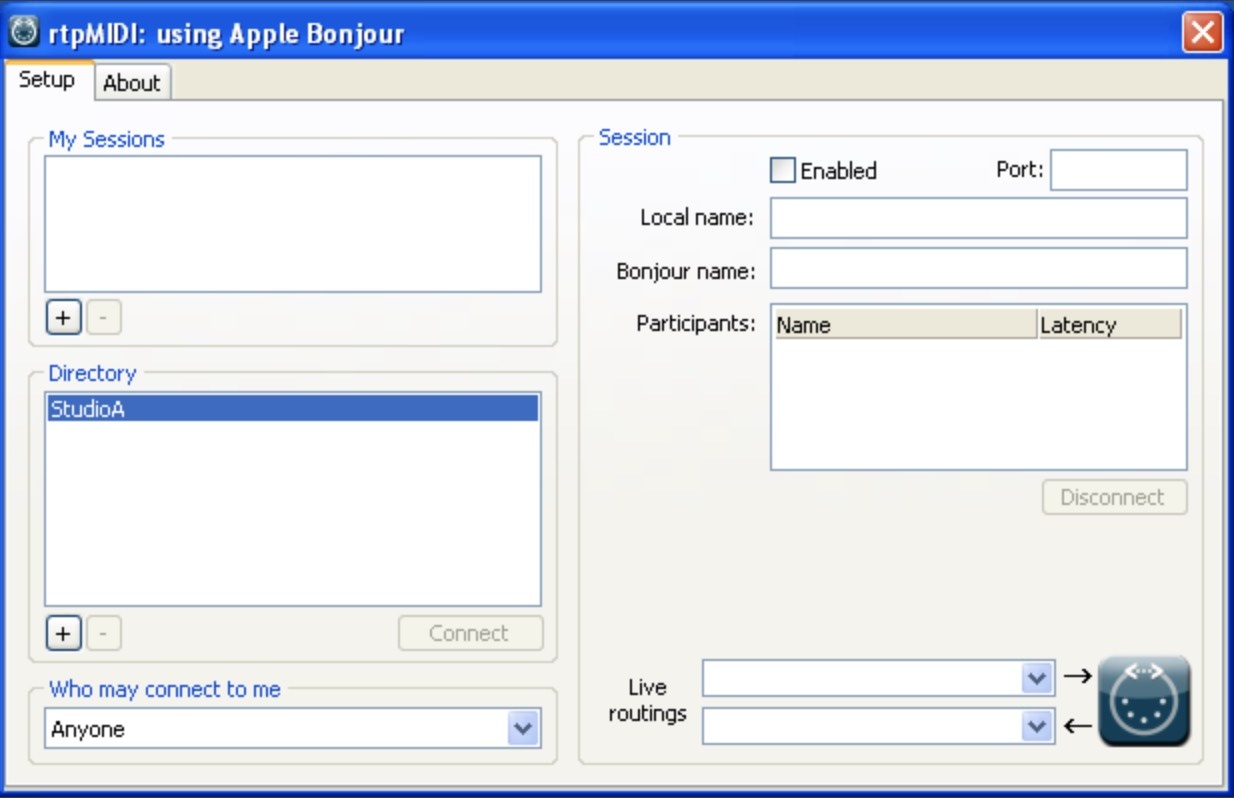
Configuring Audio MIDI Setup on the Pro Tools® computer to send MTC & MMC over the Network
On the Pro Tools® computer, go to Applications → Utilities & open Audio MIDI Setup. The MIDI Network Setup window should appear:
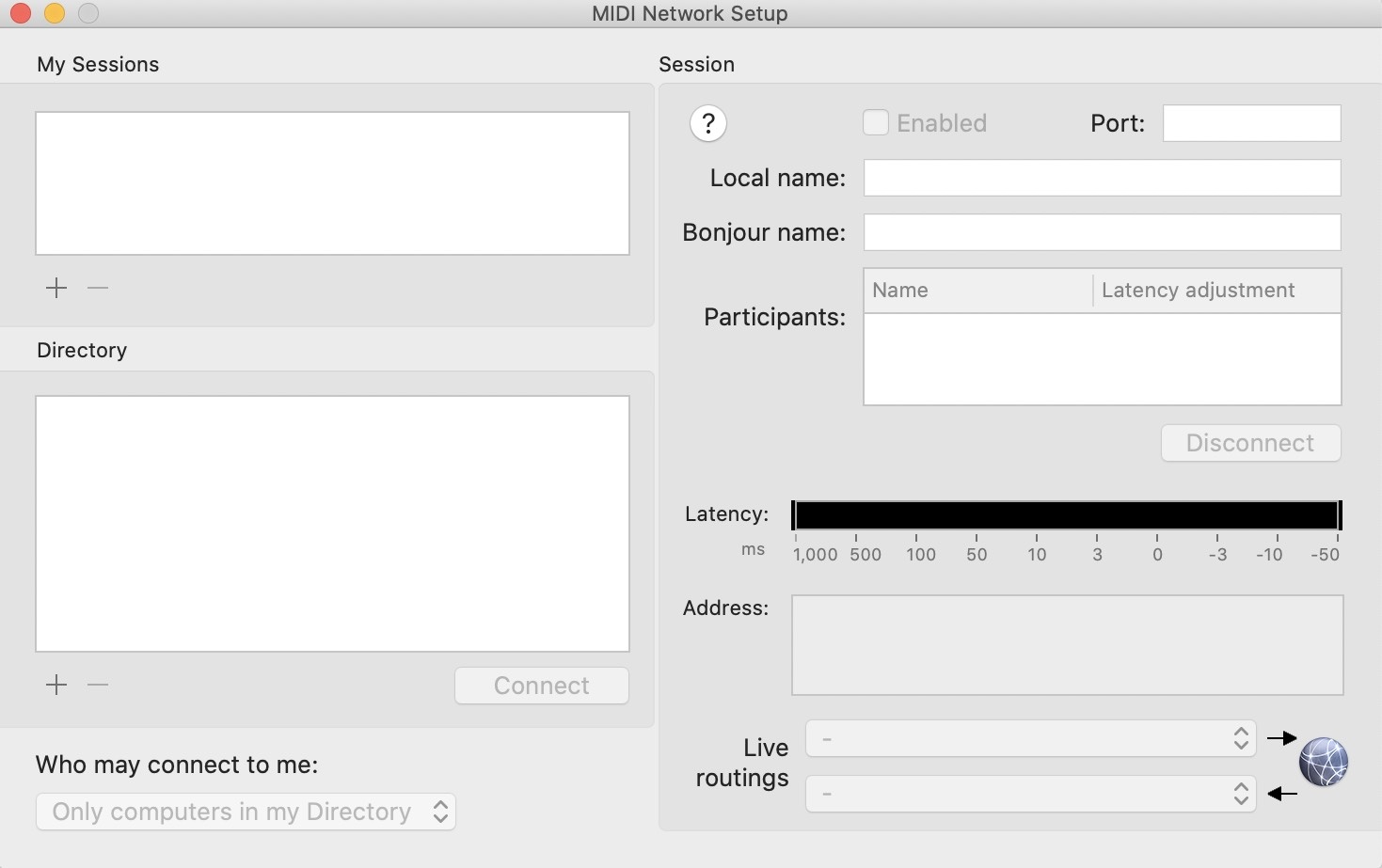
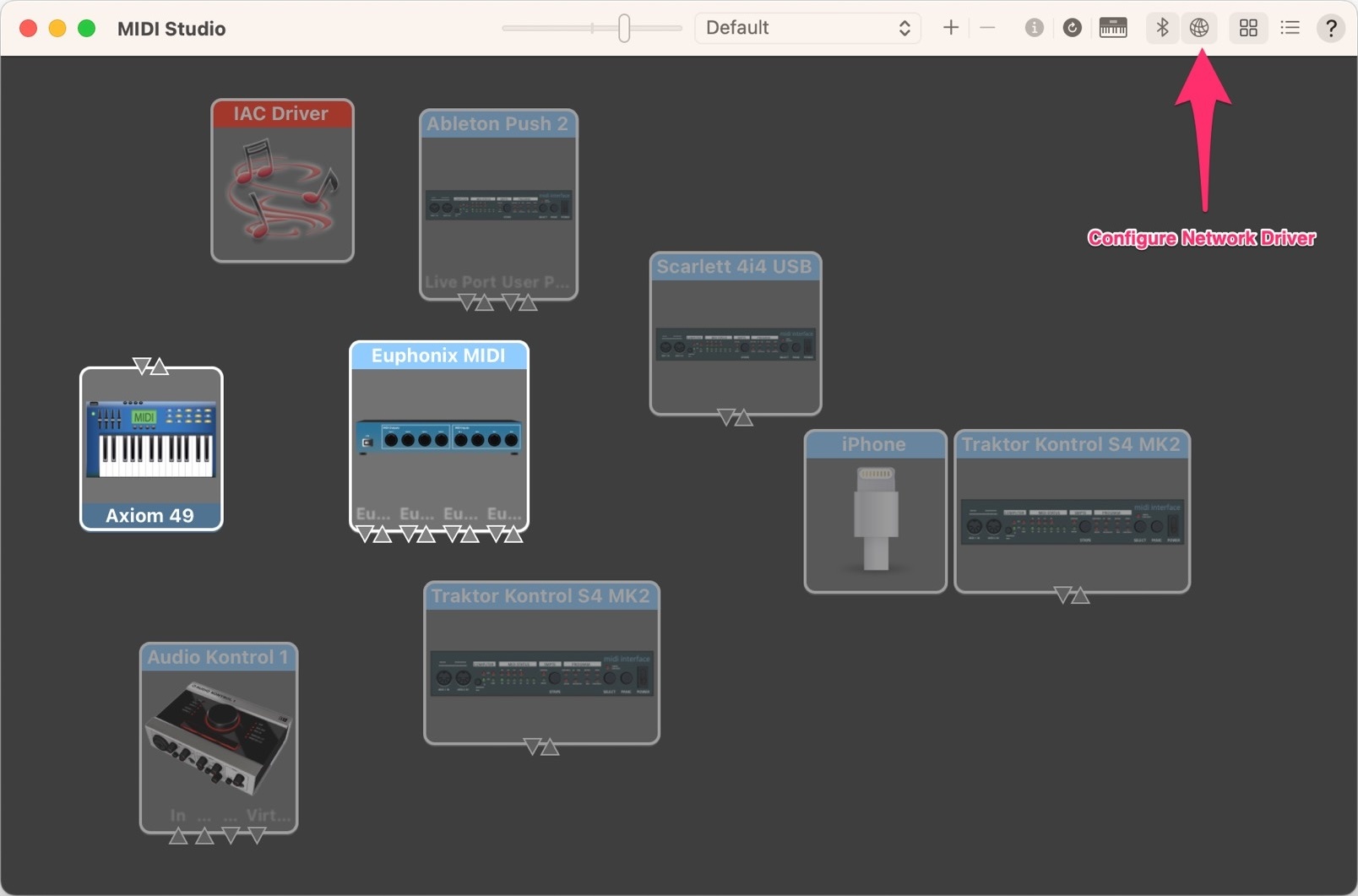
If the window is not shown, select Window → Show MIDI Studio & then from the MIDI Studio menu that appears, select Open MIDI Network Setup.
In newer versions of macOS, the Open MIDI Network Setup option is accessed via the Network Icon to the top right of the window, called Configure Network Driver.
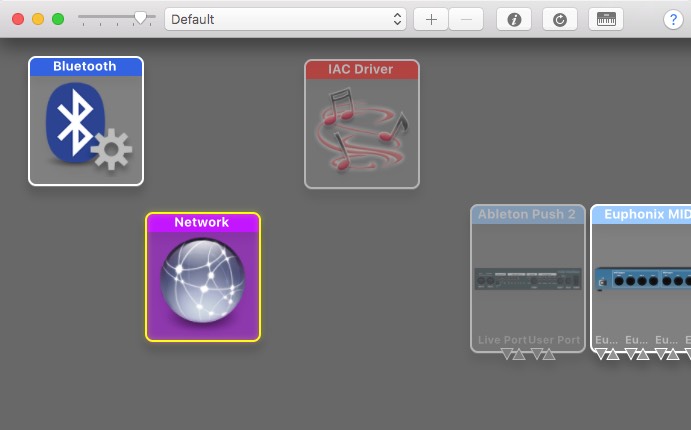
In older versions of Audio MIDI Setup where this option is not present, it can be accessed by double-clicking the Network device icon in the default MIDI Studio window.
In the My Sessions field top left, create a new session by clicking +.
Click the checkbox to the left of the name to enable the session.
Rename it (computer 1 name) MTC/MMC Send (or something similar) - e.g. MacProHDX MTC/MMC Send. This name will automatically be copied to the Local name field. The Local name is the name that appears on this local computer.
Copy this name & paste it in the Bonjour name field. The Bonjour name is the name that is displayed on the other computers in the network.
Although a session can be used in either input or output directions, to avoid confusion it is recommended to stick to one direction by noting this in the session name, e.g. Send or Out.
MTC & MMC do not require separate Network sessions made for each - they can share the same session.
Set the Port: field to 5004. If this Port has already been assigned a different number - especially where other sessions already exist that may be using 5004, it is advised to use this suggested unique new number. Assign a unique number for each session - with preferably at least one free number between each assigned port.
Select Anyone in the Who may connect to me dropbox on the bottom left.
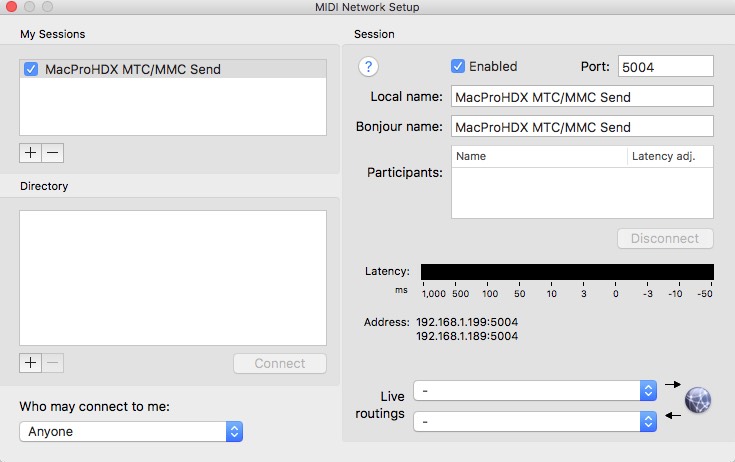
Configuration is complete for the Pro Tools® computer. This should not need to be set up again in future.
Configuring Audio MIDI Setup on the Cue Pro computer to receive Network MTC & MMC
On the Cue Pro computer, close Cue Pro & open Audio MIDI Setup. Open the MIDI Network Setup window as described above. The Pro Tools® computer should be visible in the Directory field - showing (computer 1 name) MTC/MMC Send with a green active circle to the left.
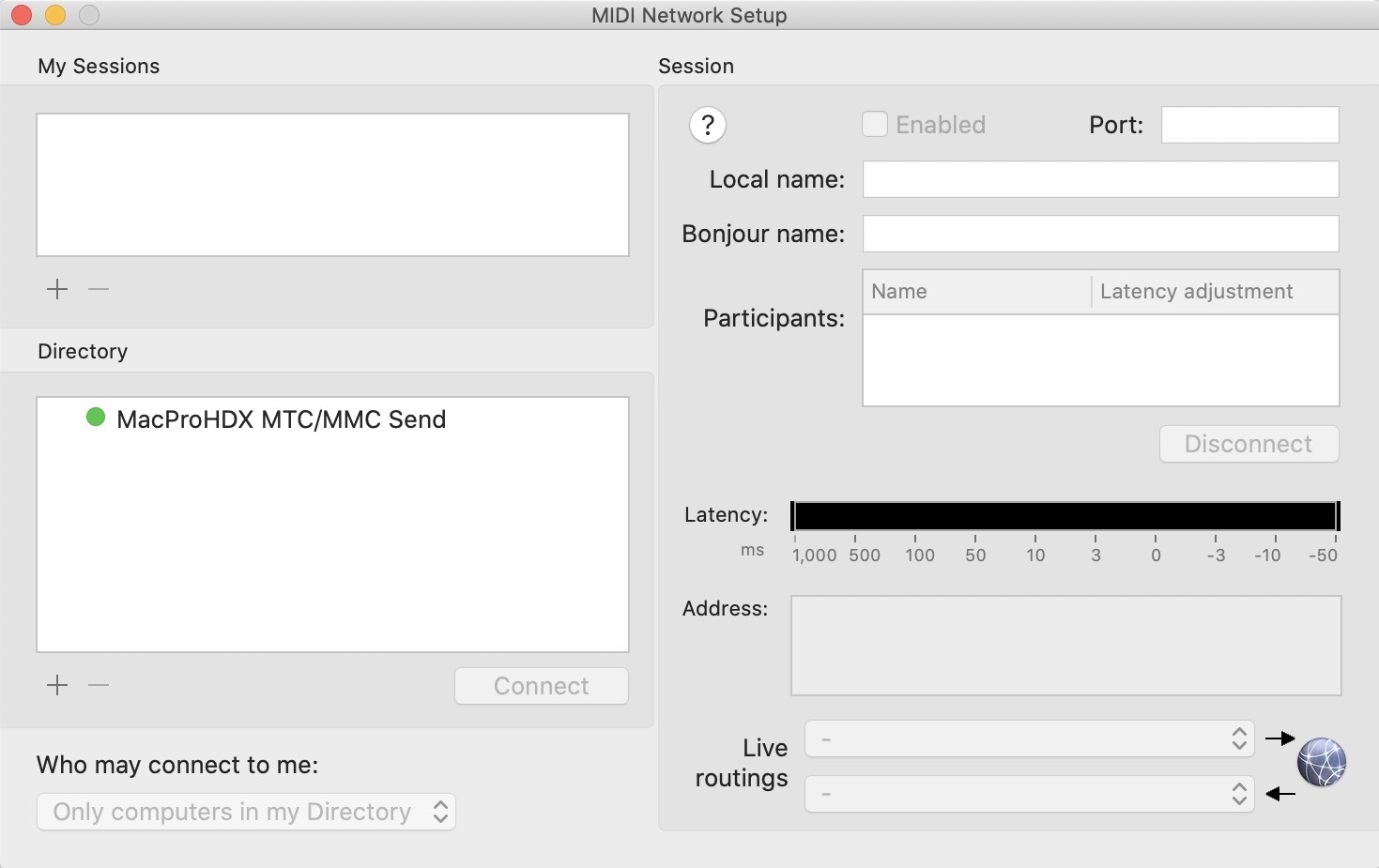
In the My Sessions field top left, create a new session by clicking +.
Click the checkbox to the left of the name to enable the session.
Rename it (computer 2 name) MTC/MMC Receive (or something very similar) - e.g. MacbookPro MTC/MMC Receive.
This name will automatically be copied to the Local name field.
Copy this name & paste it in the Bonjour name field.
Set the Port: field to 5006.
Select Anyone in the Who may connect to me: selection field on the bottom left.
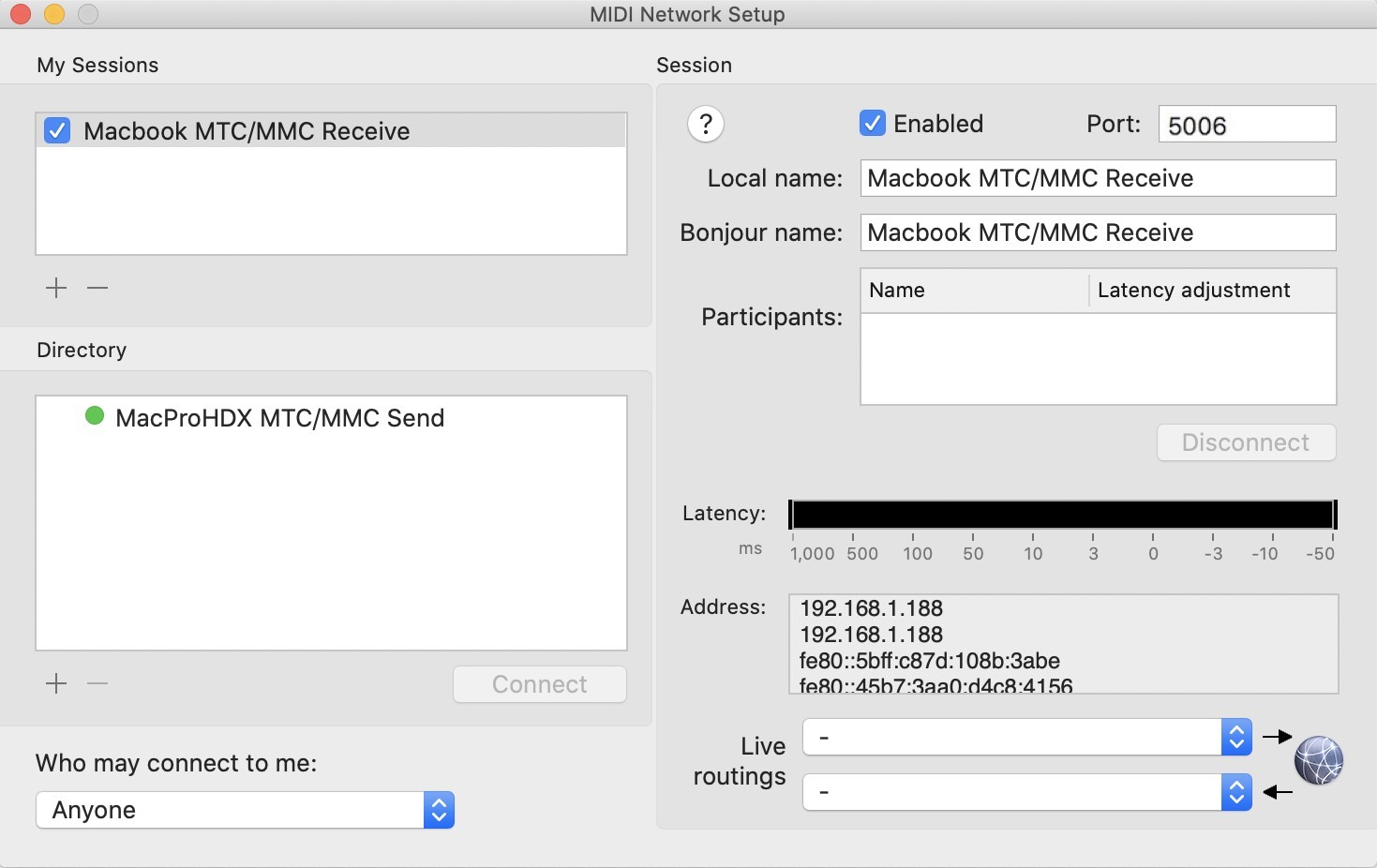
Connecting the Network MTC/MMC Sessions
Now that the two Sessions have been created, the next step is to connect them. The steps until this point should not need to be done again in future. The following simple steps to connect only need to be done once every time the computers are restarted.
With the (computer 2 name) MTC/MMC Receive session selected in the My Sessions box, select (computer 1 name) MTC/MMC Send in the Directory field, and hit the Connect button.
(computer 1 name) MTC/MMC Send should now appear in the Participants: field on the right.
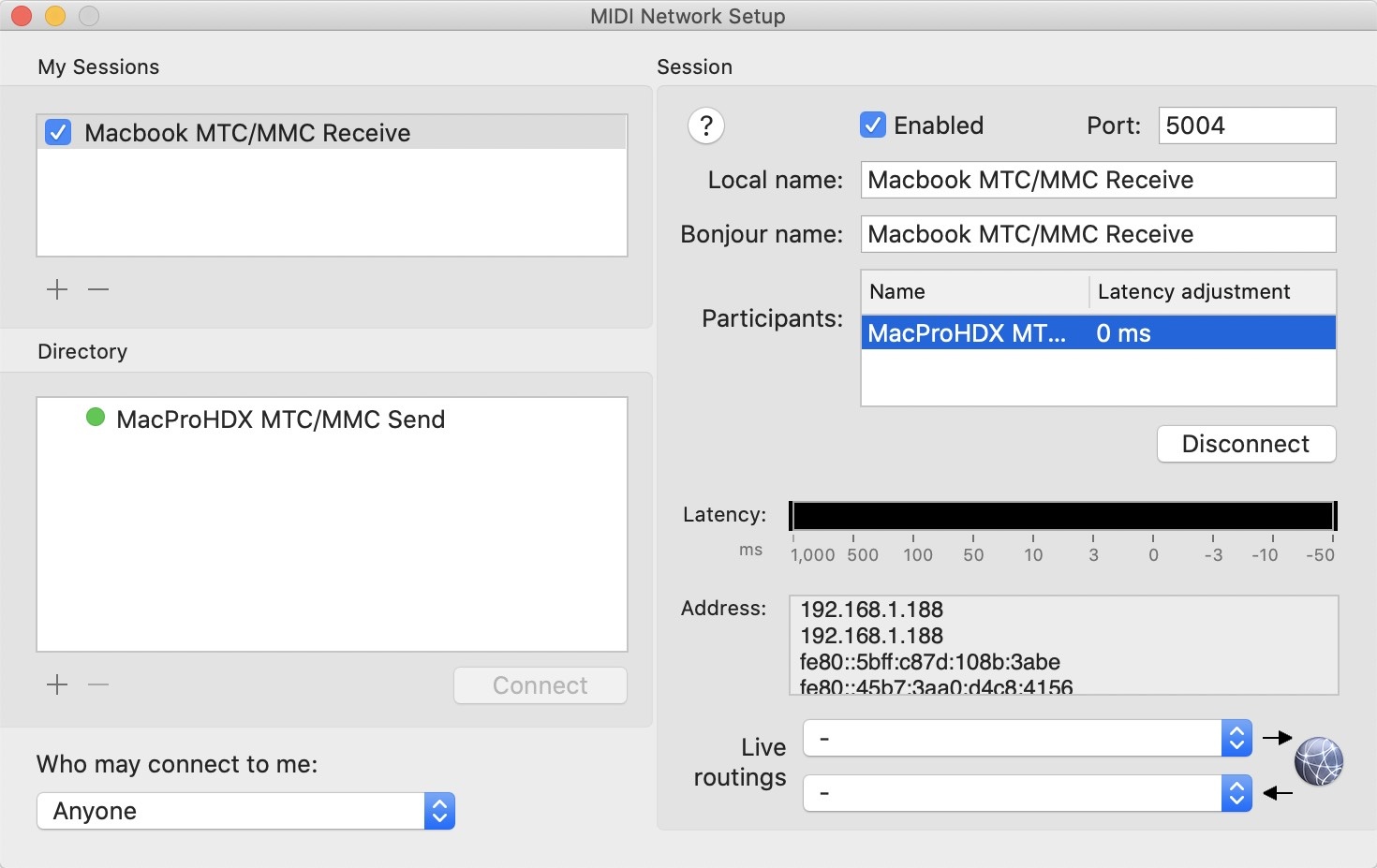
Regardless of which computer is chosen to Connect, only one of the computers needs to connect to establish the connection.
On the Pro Tools® computer, (computer 2 name) MTC/MMC Receive should now also be seen in the Participants: window.
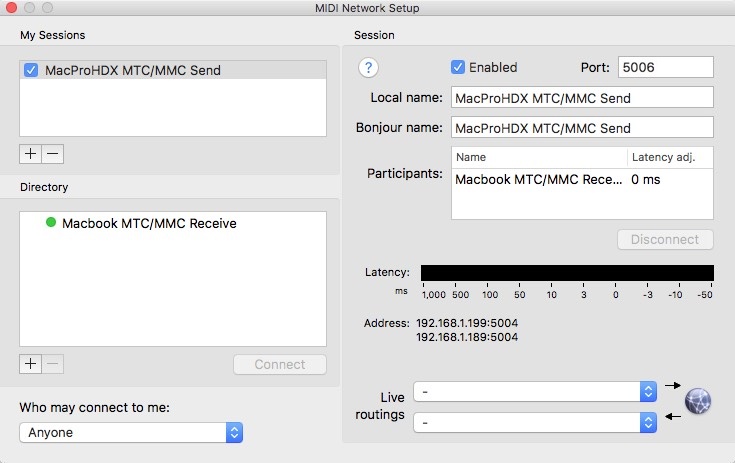
If the (computer 2 name) MTC/MMC Receive session does not show up in the Directory list, try re-launch Audio-MIDI-Setup.
Cue Pro MTC / MMC Setup
Launch Cue Pro. If Cue Pro was open already, use the Rescan Available MIDI Ports button in the SYNC preferences.
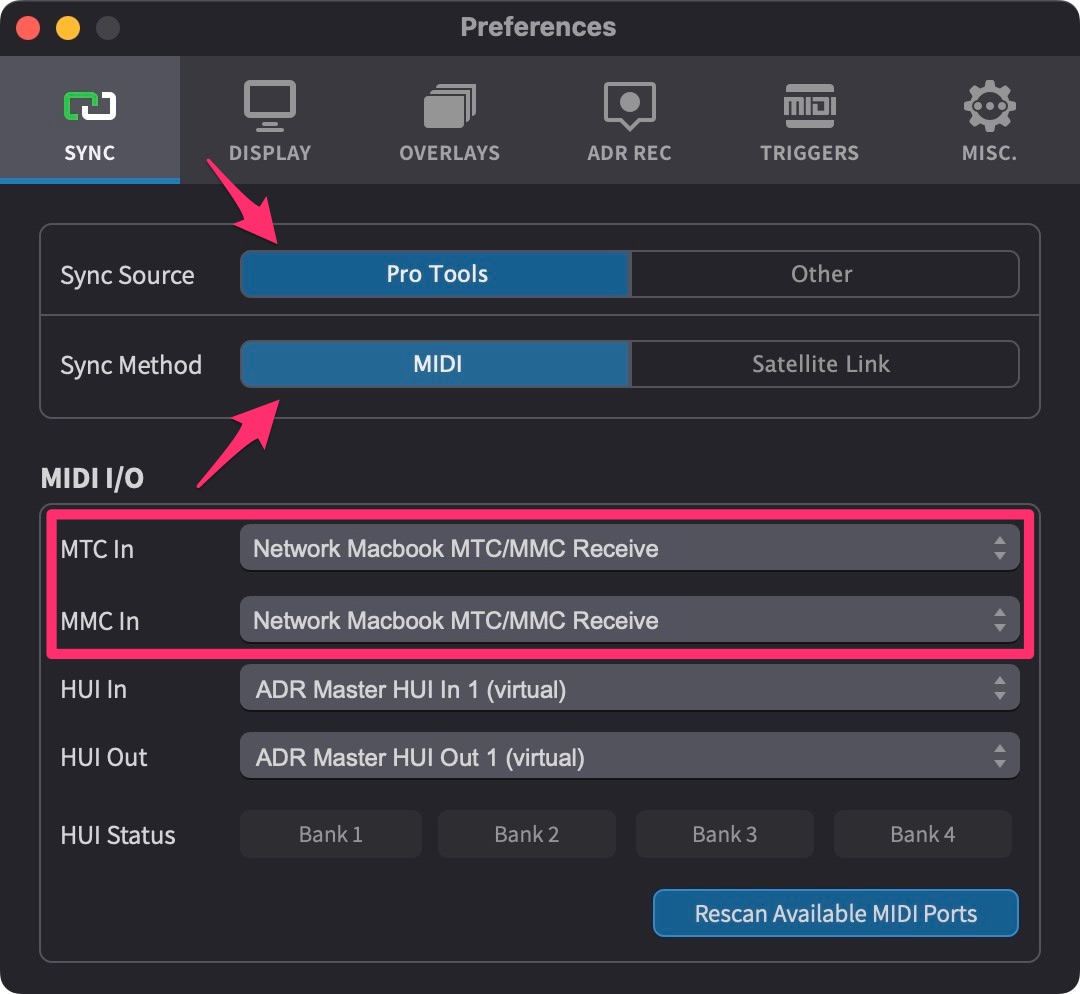
To show the MIDI I/O options in Cue Pro, first navigate to the SYNC tab of the Preferences / Settings window.
Set the Sync Source field to Pro Tools.
Set the Sync Method field to MIDI.
Next, select Network (computer 2 name) MTC/MMC Receive in both the MTC In & MMC In fields, as per the image below:.
Pro Tools Network MTC (MIDI Timecode) Setup
In Pro Tools®, go to Setup → MIDI → MIDI Input Devices & make sure that the Network, (computer 1 name) MTC/MMC Send is enabled.
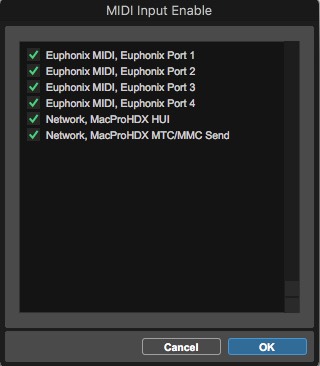
MIDI Inputs are disabled by Pro Tools® by default until they are manually activated.
Next go to Setup → Peripherals → Synchronization tab.
In the MTC Generator Port dropdown menu, choose Predefined → Network, (computer 1 name) MTC/MMC Send.
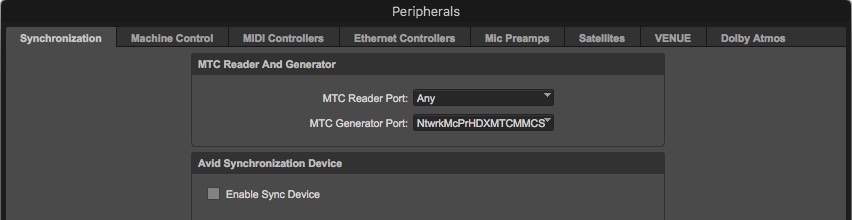
Click OK to close the window.
Important: For MTC/MMC sync to work correctly, Pro Tools® must be set to Timecode ruler mode, not Bars|Beats ruler mode. This can be changed by clicking on the arrow to the right of the timecode value in the grid setting in the Pro Tools® UI.
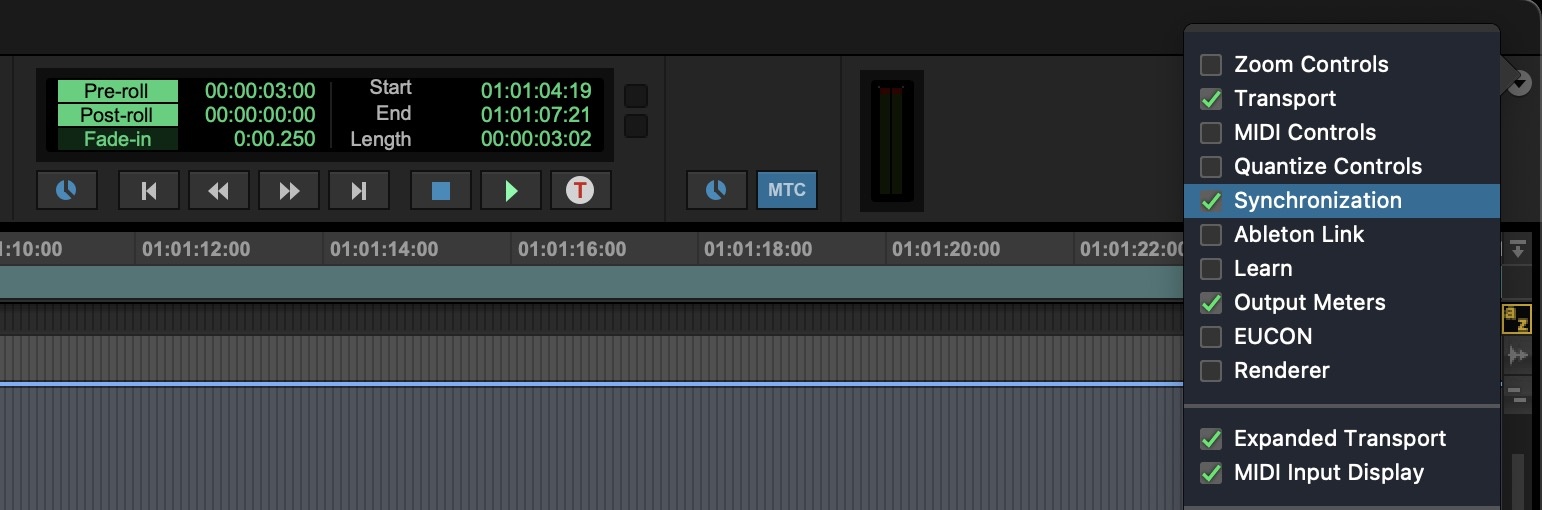
To show the Synchronization controls in the Edit window, click the arrow at the top right of the Edit window toolbar and enable Synchronization in the dropdown menu. Click the MTC button in the Synchronization controls area to enable MTC generation.
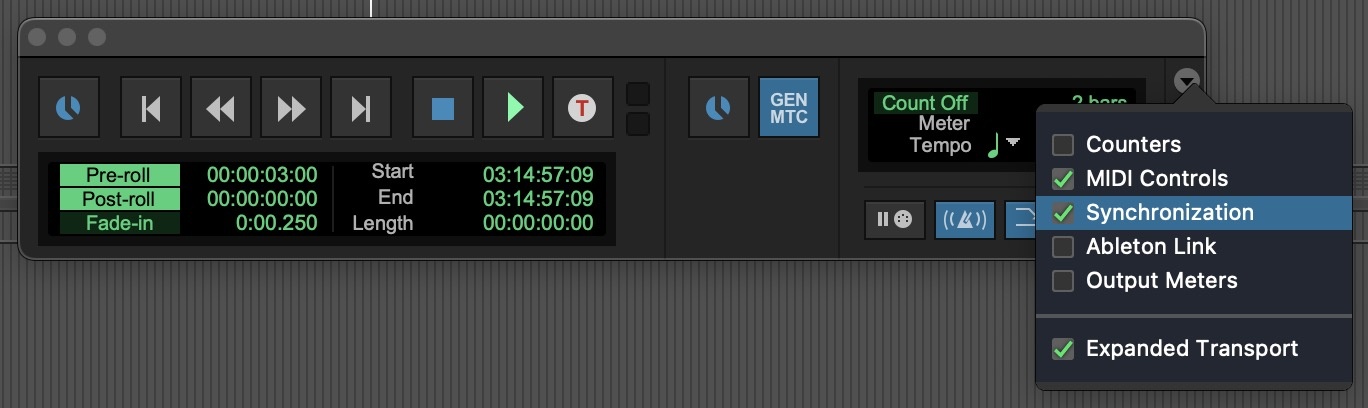
Alternatively, the Synchronization controls can be enabled in the Transport window - click the arrow at the top right of the Transport window and enable Synchronization. Click the MTC button in the Synchronization controls area to enable MTC generation.
Pro Tools Network MMC
To enable MMC in Pro Tools®, go to the Machine Control tab of the Setup → Peripherals window.
In the Machine Control Master field, set the Enable checkbox.
Check that the ID field is set to 127.
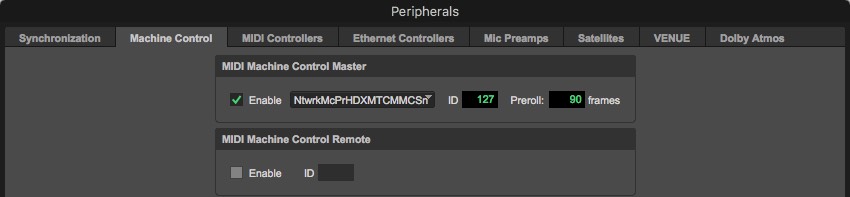
Select Predefined → Network, (computer 1 name) MTC/MMC Send.
Click OK to close the window.
Now go to Setup → Preferences / Settings → Synchronization tab.
Make sure that Machine Chases Memory Location and Machine Follows Edit Insertion/Scrub are both enabled:
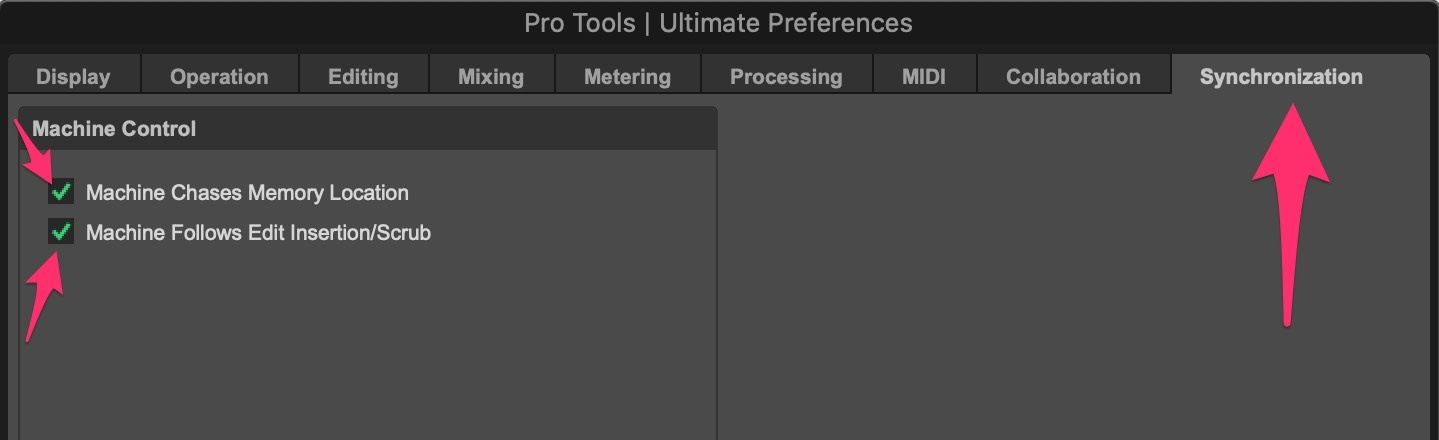
When Machine Chases Memory Location is enabled, Pro Tools® will send an MMC Locate command whenever a specific memory location is clicked. With the Machine Follows Edit Insertion/Scrub checkbox checked, Pro Tools® will send MMC Locate commands every time the position of the edit insertion is changed.
Configuring Audio MIDI Setup on the Cue Pro computer to send and receive HUI
If looped playback is required with MTC & MMC sync options, Cue Pro must be enabled as a HUI controller.
Note: If looped playback is not required, for best performance it is suggested to leave HUI off - in which case this step can be skipped until the Enabling Synchronised playback section of this chapter.
Unlike MTC & MMC, HUI controllers need a two-way connection - meaning that they send and receive information. One session in Audio MIDI Setup can receive and transmit HUI information at the same time though - so there's no need to create separate sessions to send and receive HUI messages.
On the Cue Pro computer, go to Applications → Utilities & open Audio MIDI Setup again.
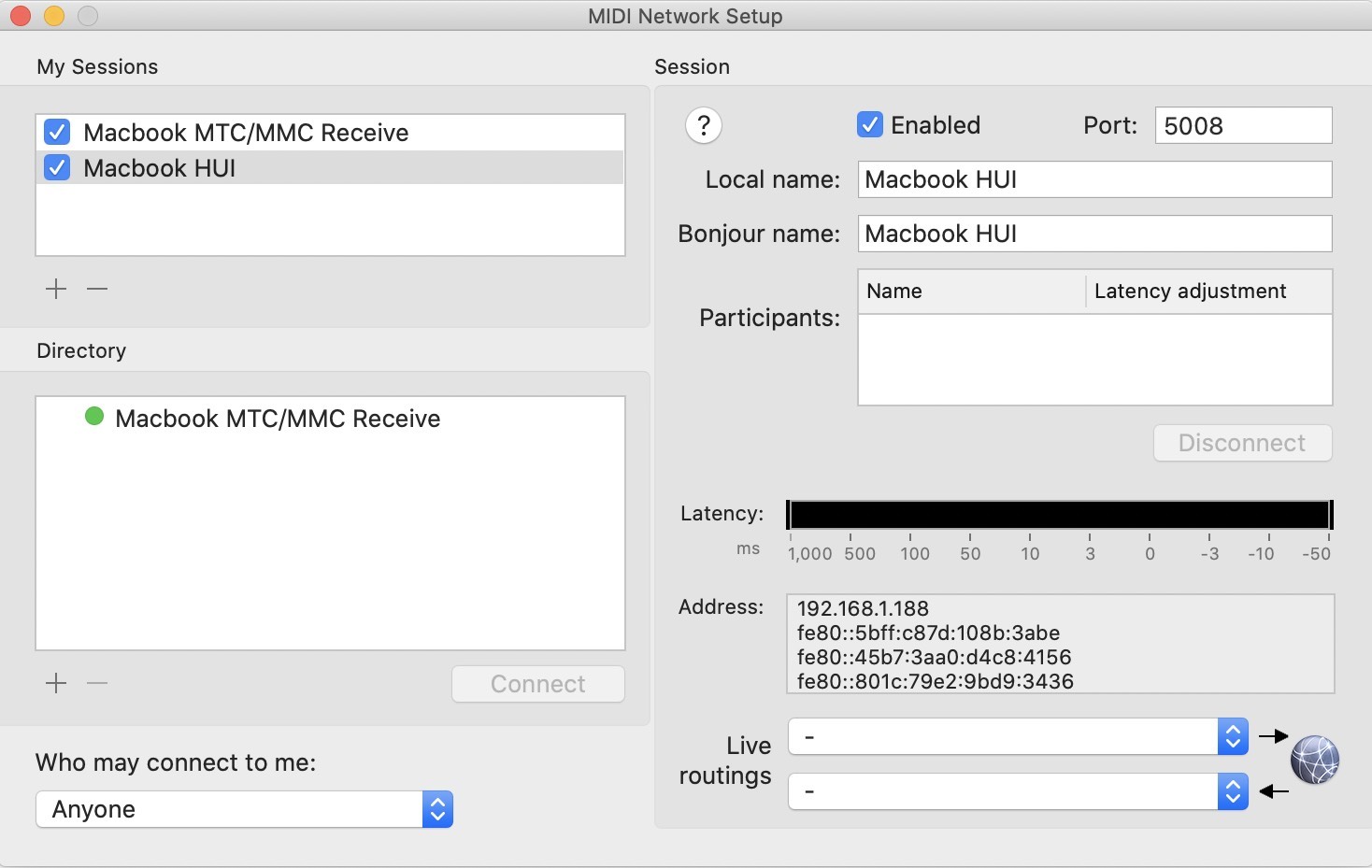
In the My Sessions field top left, create a new session by clicking the +.
Click the checkbox to the left of the name to enable the session.
Rename it (computer 2 name) HUI (or something very similar) - e.g. MacbookPro HUI.
This name will automatically be copied to the Local name field.
Copy this name & paste it in the Bonjour name field.
Set the Port: field to 5008.
Select Anyone in the Who may connect to me: selection field on the bottom left.
Cue Pro Network HUI Setup
Open the SYNC tab in the Preferences / Settings window.
Select the newly created HUI session Network (computer 2) HUI for HUI In.
Select the newly created HUI session Network (computer 2) HUI for HUI Out.
Configuring Audio MIDI Setup on the Pro Tools computer to send and receive HUI
Switch to the Pro Tools® computer & open Audio-MIDI Setup.
The Cue Pro computer's HUI session should be visible in the Directory field - showing (computer 1 name) HUI with a green active circle to the left.
In the My Sessions field top left, create a session by clicking +.
Click the checkbox to the left of the name to enable the session.
Rename it (computer 1 name) HUI (or something very similar) - e.g. MacProHDX HUI.
This name will automatically be copied to the Local name field.
Copy this name & paste it in the Bonjour name field.
Set the Port: field to 5010.
Select Anyone in the Who may connect to me: selection field on the bottom left.
Connecting the Network HUI Sessions
Still in Audio MIDI Setup on the Pro Tools computer, with the (computer 1 name) HUI session selected in the My Sessions box, select (computer 2 name) HUI in the Directory field, and hit the Connect button.
(computer 2 name) HUI should now appear in the Participants: field on the right.
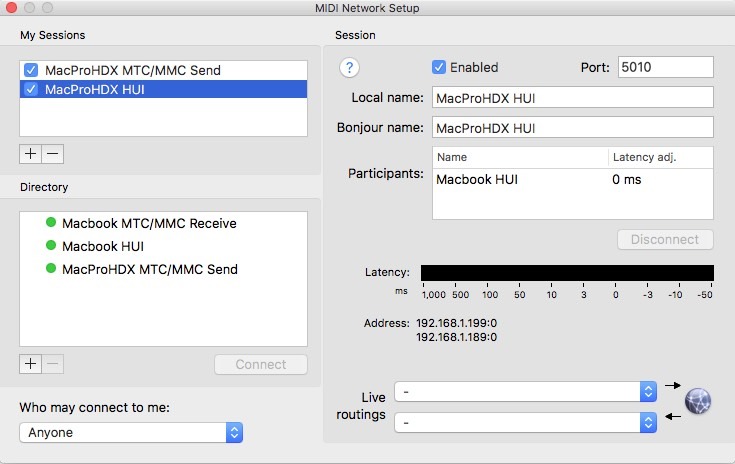
Pro Tools Network HUI Setup
In Pro Tools®, go to Setup → MIDI → MIDI Input Devices & make sure that the Network, (computer 1 name) HUI is enabled.
Next go to Setup → Peripherals → MIDI Controllers tab.
In the first row, under the Type column, select HUI.
In the adjacent Receive From column, select Network, (computer 1 name) HUI.
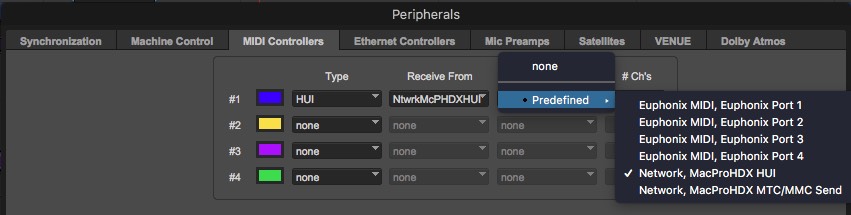
In the adjacent Send To column, select Network, (computer 1 name) HUI.
Only one HUI bank is required for loop playback. But more can be added for DAW Control.
Click OK once done. Pro Tools® will start sending HUI messages to Cue Pro periodically to check if the HUI controller is still connected. Cue Pro will reply to these messages by sending a MIDI message back. Open Audio MIDI Setup's MIDI Network Setup** again. This MIDI traffic (depicted by tiny red lines) should be visible when selecting the HUI port on either computer.
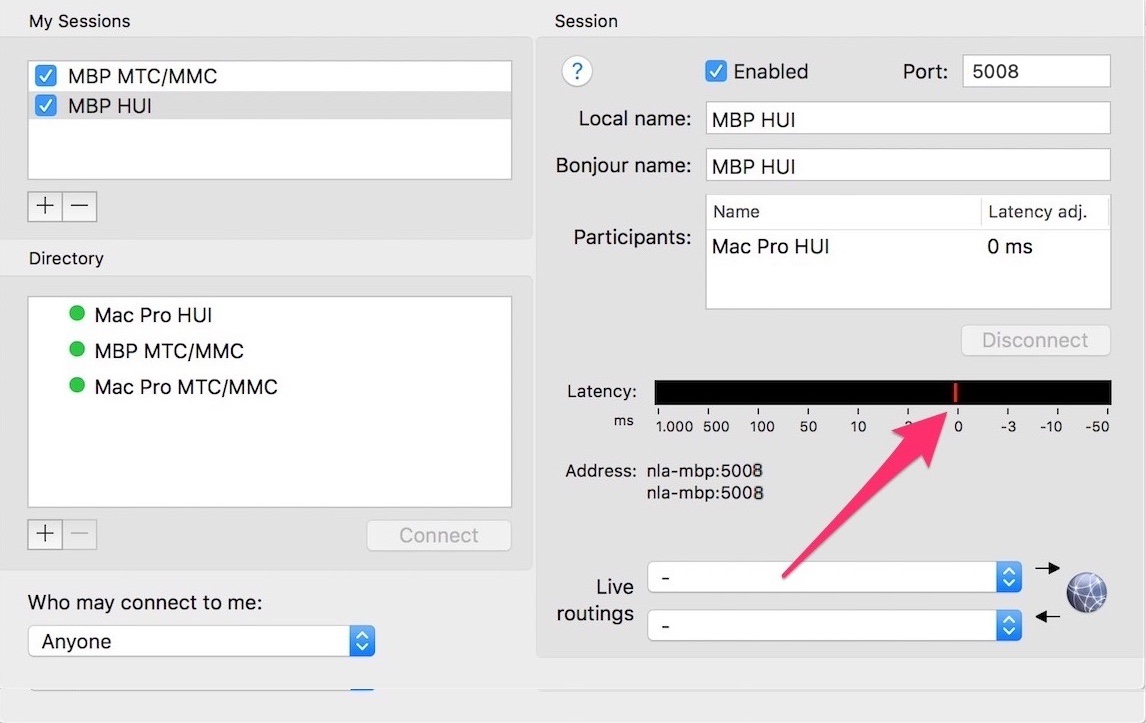
If these lines are visible, Cue Pro is successfully connected as HUI controller to Pro Tools®. Cue Pro will now be able to properly follow looped playback in Pro Tools®.
Note: Although Cue Pro can follow looped playback in Pro Tools®, it is possible that playback can drift out of sync slightly after a few iterations of the loop when using HUI.
Matching Frame Rates
For MTC sync to work correctly, the Pro Tools® session frame rate must match the timeline frame rate in Cue Pro.
In the TIMELINES tab, locate the active timeline and check its frame rate in the summary section. If video is present on the timeline, the frame rate is derived from the video file. If no video is present, the frame rate can be set manually by clicking the pencil icon next to the timeline name and selecting the required frame rate from the TC Frame Rate menu.
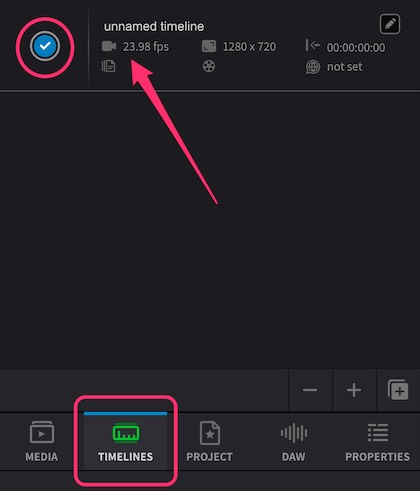
In Pro Tools®, go to Setup → Session and set the Timecode Rate field to match the Cue Pro timeline frame rate.
Enabling Synchronised playback
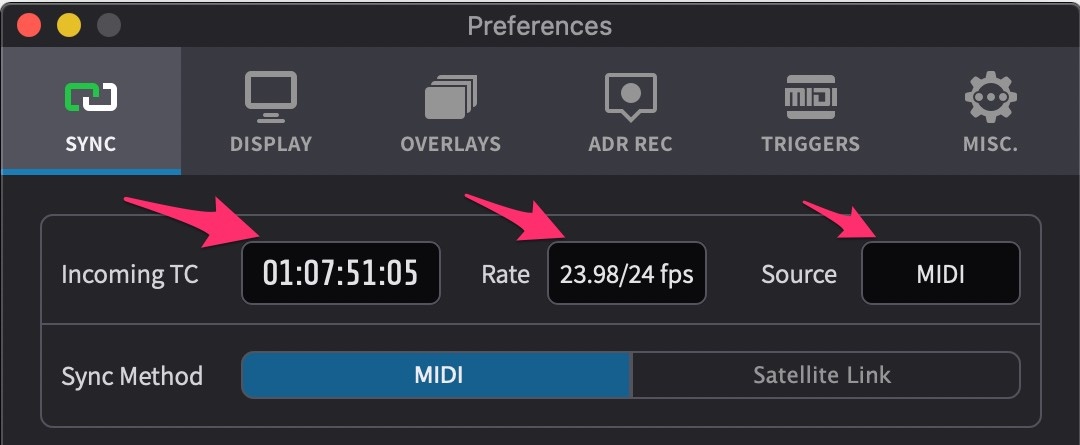
When hitting play or scrubbing within Pro Tools®, the incoming timecode field should now be seen incrementing, and the timecode rate displayed within the Incoming TC section to the left of the main timecode counter in Cue Pro.
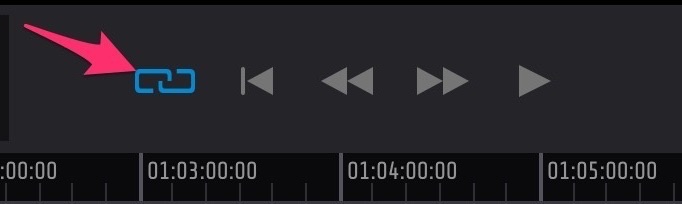
Click the Sync button to the left of the transport buttons to follow external sync - so that it turns blue.
Cue Pro MTC/MMC sync is now online & ready to go. Hit play in Pro Tools® and Cue Pro will play back in sync.
High Frame Rate Content
Cue Pro supports timelines running at up to 60 frames per second. However, MTC was designed around SMPTE broadcast standards and only supports frame rates up to 30fps (24, 25, 29.97, and 30). The specification has never been updated to include higher frame rates.
To sync high frame rate timelines via MTC, go to Setup → Session in Pro Tools® and set the Timecode Rate field to half the timeline frame rate. For example:
- 48fps timeline → set Pro Tools® to 24fps
- 50fps timeline → set Pro Tools® to 25fps
- 60fps timeline → set Pro Tools® to 30fps
Cue Pro will automatically match the incoming timecode at half its frame rate.
Troubleshooting
If incoming timecode is not showing in Cue Pro:
- Check that MTC generation is enabled in Pro Tools® (MTC button active in Synchronization controls)
- Check that the correct network MTC port is selected in Pro Tools® Synchronization preferences
- Check that the network MIDI sessions are connected in Audio MIDI Setup on both computers
- Check that the MTC and MMC ports are not swapped - MTC is configured in Setup → Peripherals → Synchronization tab, MMC in the Machine Control tab
If incoming timecode is showing but playback is not syncing:
- Ensure the Sync button is enabled (blue) in Cue Pro
- Check that frame rates match (see Matching Frame Rates above)
- Check that timecode ranges match - if Pro Tools® starts at 01:00:00:00 but the timeline starts at 10:00:00:00, playback will not begin until Pro Tools® reaches 10:00:00:00
If Cue Pro's position only updates during playback but not when navigating in Pro Tools®:
- This indicates an issue with MMC (MIDI Machine Control) setup
- Check that the correct network MMC port is selected in Pro Tools® Machine Control settings
- Check that the MMC network MIDI sessions are connected in Audio MIDI Setup on both computers
- Ensure Machine Chases Memory Location and Machine Follows Edit Insertion/Scrub are enabled in Pro Tools® Synchronization preferences
If playback is jumpy or frames are being skipped:
- This is often caused by mismatched frame rates between Pro Tools® and Cue Pro - ensure both are set to the same frame rate (see Matching Frame Rates above)
- Try increasing the TC Freewheel value in Preferences → MISC. This defines a number of freewheel frames to keep playback running through unexpected timecode values. Note that higher values will make Cue Pro less responsive to external timecode changes.
If the Cue Pro HUI ports are not showing in Pro Tools®:
- Ensure the MIDI input devices have been enabled - go to Setup → MIDI → MIDI Input Enable and check that the Cue Pro HUI ports are enabled
If Pro Tools® loops but Cue Pro continues playing:
- Loop playback requires HUI to be configured - check that the HUI ports are correctly selected in both Cue Pro and Pro Tools® MIDI Controllers settings
- Ensure that one of the HUI Status banks shows activity (lit up) in Cue Pro's SYNC preferences, indicating Pro Tools® is communicating
- If a HUI port is already in use for DAW Control, try selecting a different HUI port (e.g., HUI port 2 instead of HUI port 1)
If synchronised playback still does not work after following these steps, please contact support@non-lethal-applications.com.